Best Analytics Tools for Website Performance Tracking
Review the best analytics tools for tracking website performance, user behavior, and conversion rates.
Review the best analytics tools for tracking website performance, user behavior, and conversion rates.
Best Analytics Tools for Website Performance Tracking
Understanding Website Analytics Importance for Digital Marketing Success
In today's digital landscape, a website is often the cornerstone of a business's online presence. But simply having a website isn't enough; you need to understand how it's performing. This is where website analytics tools come into play. These powerful platforms provide invaluable insights into user behavior, traffic sources, content effectiveness, and conversion rates. Without them, you're essentially flying blind, making marketing decisions based on guesswork rather than data. For digital marketing agencies and businesses alike, leveraging the right analytics tools is crucial for optimizing campaigns, improving user experience, and ultimately driving growth. They help you identify what's working, what's not, and where opportunities lie for improvement. From understanding which marketing channels bring the most valuable traffic to pinpointing bottlenecks in your conversion funnels, analytics tools are the compass guiding your digital strategy.
Key Metrics and KPIs to Track with Website Analytics Tools
When diving into website analytics, it's easy to get overwhelmed by the sheer volume of data. However, focusing on key metrics and Key Performance Indicators (KPIs) can help you extract actionable insights. Here are some of the most important ones:
Traffic Sources and Acquisition Channels Analysis
Understanding where your visitors come from is fundamental. This includes organic search, paid search, social media, referral traffic, direct traffic, and email campaigns. By analyzing these sources, you can determine which marketing efforts are most effective in driving traffic to your site. For example, if organic search is a major driver, it indicates strong SEO performance. If paid search is underperforming, you might need to optimize your ad campaigns.
User Behavior and Engagement Metrics Deep Dive
Once visitors are on your site, what do they do? Metrics like bounce rate (the percentage of single-page sessions), pages per session, and average session duration reveal how engaged users are with your content. A high bounce rate on a landing page might indicate irrelevant content or a poor user experience. Conversely, a low bounce rate and high pages per session suggest users are finding your content valuable and exploring further.
Conversion Rates and Goal Completions Tracking
Ultimately, most websites have specific goals, whether it's making a purchase, filling out a form, or downloading a resource. Conversion rates measure the percentage of visitors who complete these desired actions. Tracking goal completions allows you to assess the effectiveness of your website in achieving its business objectives. This is where the rubber meets the road – are your marketing efforts translating into tangible results?
Website Speed and Performance Optimization Insights
Website speed is not just a technical detail; it's a critical factor in user experience and SEO. Slow loading times can lead to high bounce rates and lower search engine rankings. Analytics tools can help you monitor page load times and identify areas for optimization, ensuring your visitors have a smooth and fast browsing experience.
Audience Demographics and Segmentation for Targeted Marketing
Knowing who your audience is allows for more targeted and effective marketing. Analytics tools can provide insights into demographics (age, gender, location), interests, and even the technology they use to access your site. Segmenting your audience based on these characteristics enables you to tailor content and campaigns to specific groups, leading to higher engagement and conversion rates.
Top Analytics Tools for Comprehensive Website Performance Tracking
Now, let's dive into some of the best analytics tools available, comparing their features, use cases, pricing, and ideal users.
Google Analytics 4 GA4 The Industry Standard for Web Analytics
Google Analytics 4 (GA4) is Google's latest iteration of its widely used web analytics service. It represents a significant shift from its predecessor, Universal Analytics, focusing on event-based data collection and a more unified view of user journeys across websites and apps. GA4 is designed to be future-proof, especially in a world with increasing privacy concerns and a move away from third-party cookies.
Key Features of Google Analytics 4
* Event-based Data Model: Unlike Universal Analytics' session-based model, GA4 tracks every user interaction as an event. This provides a more flexible and granular understanding of user behavior, from page views and clicks to video plays and file downloads.
* Cross-Platform Tracking: GA4 offers a unified view of the customer journey across both websites and mobile apps, which is crucial for businesses with a multi-platform presence.
* Enhanced Machine Learning Capabilities: It leverages Google's machine learning to provide predictive metrics (e.g., churn probability, purchase probability) and automatically identify significant trends and anomalies in your data.
* Privacy-Centric Design: GA4 is built with privacy in mind, offering more flexible data controls and operating effectively with or without cookies.
* BigQuery Export: For advanced users, GA4 allows for direct export of raw event data to BigQuery, enabling highly customized analysis and integration with other data sources.
* Explorations: A powerful set of reporting techniques (e.g., Funnel Exploration, Path Exploration, Segment Overlap) that allow for deep dives into user behavior and custom analysis.
Use Cases and Ideal Users for GA4
GA4 is ideal for businesses of all sizes, from small startups to large enterprises, that need a comprehensive understanding of their digital performance. It's particularly beneficial for:
* E-commerce Businesses: To track product views, add-to-carts, purchases, and customer lifetime value.
* Content Publishers: To understand content engagement, popular articles, and user flow.
* Mobile App Developers: To analyze app usage, in-app purchases, and user retention.
* Digital Marketing Agencies: To provide clients with detailed performance reports and optimize campaigns across various channels.
* Data Analysts: Who require granular data for advanced analysis and predictive modeling.
Pricing of Google Analytics 4
GA4 is primarily a free tool, offering robust features for most businesses. There is a paid version, Google Analytics 360, which offers higher data limits, advanced features, and dedicated support, typically for very large enterprises with extensive data needs. For the vast majority of users, the free version of GA4 is more than sufficient.
Adobe Analytics Advanced Enterprise Level Data Analysis
Adobe Analytics is a powerful, enterprise-grade analytics solution that offers deep insights into customer behavior across all digital touchpoints. It's part of the Adobe Experience Cloud and is known for its highly customizable reporting, advanced segmentation, and real-time data capabilities. While Google Analytics is often seen as the entry point, Adobe Analytics caters to organizations with complex data requirements and a need for highly tailored reporting.
Key Features of Adobe Analytics
* Real-time Data Collection: Provides immediate insights into user behavior, allowing for quick adjustments to campaigns and website content.
* Advanced Segmentation: Offers highly sophisticated segmentation capabilities, enabling users to analyze specific customer groups with precision.
* Customizable Reporting: Users can build highly customized dashboards and reports tailored to their specific business needs and KPIs.
* Attribution Modeling: Provides various attribution models to understand the true impact of different marketing channels on conversions.
* Integration with Adobe Experience Cloud: Seamlessly integrates with other Adobe products like Adobe Target, Adobe Audience Manager, and Adobe Experience Manager, creating a unified marketing ecosystem.
* Predictive Analytics: Leverages machine learning to forecast future trends and identify potential issues or opportunities.
* Offline Data Integration: Ability to integrate offline data sources with online data for a holistic view of the customer journey.
Use Cases and Ideal Users for Adobe Analytics
Adobe Analytics is best suited for large enterprises and organizations with complex digital ecosystems and significant budgets. It's particularly valuable for:
* Large E-commerce Retailers: Who need deep insights into complex customer journeys and multi-channel attribution.
* Financial Institutions: Requiring robust security and compliance features for sensitive customer data.
* Media and Publishing Companies: To analyze content consumption patterns and optimize user engagement.
* Organizations with Extensive Digital Marketing Operations: That need to integrate analytics with other marketing and advertising platforms.
* Data Scientists and Advanced Analysts: Who require powerful tools for deep data exploration and custom modeling.
Pricing of Adobe Analytics
Adobe Analytics is an enterprise-level solution, and its pricing reflects that. It is typically sold as part of the Adobe Experience Cloud suite, and pricing is custom, based on factors like data volume, features required, and the size of the organization. It's significantly more expensive than the free version of Google Analytics, often ranging from tens of thousands to hundreds of thousands of dollars annually.
Matomo Open Source Privacy Focused Analytics Solution
Matomo, formerly known as Piwik, is an open-source web analytics platform that offers a privacy-friendly alternative to Google Analytics. It allows users to host their analytics data on their own servers, giving them full control over their data and ensuring compliance with strict data privacy regulations like GDPR and CCPA.
Key Features of Matomo
* 100% Data Ownership: Users host their data on their own servers, ensuring complete control and privacy.
* GDPR and CCPA Compliance: Built with privacy by design, offering features like IP anonymization, data anonymization, and easy data export/deletion for compliance.
* Comprehensive Reporting: Provides detailed reports on visitors, traffic sources, content, goals, e-commerce, and more.
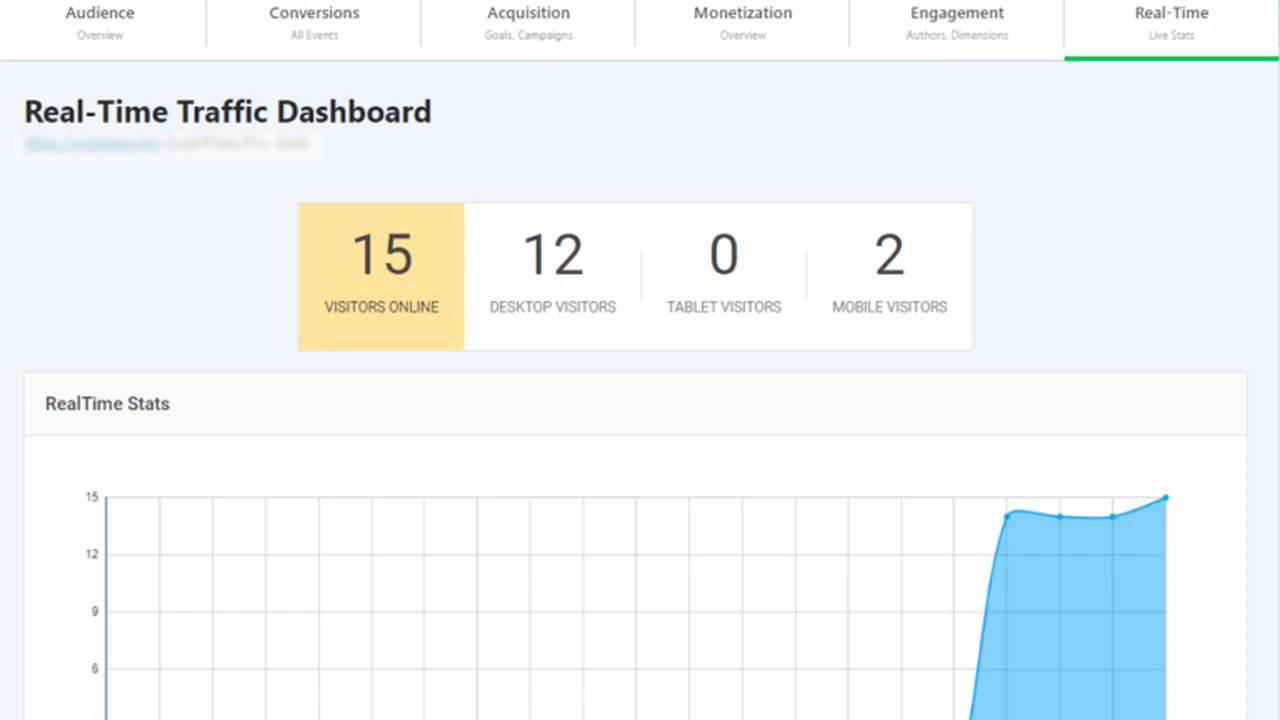
* Real-time Analytics: Offers real-time visitor logs and reports to see what's happening on your website right now.
* Customizable Dashboards: Users can create personalized dashboards to display the most relevant metrics.
* Heatmaps and Session Recordings: (Available as premium features) To visualize user behavior and understand interactions.
* A/B Testing and Funnels: (Available as premium features) To optimize website performance and conversion rates.
* No Data Sampling: Unlike some free analytics tools, Matomo processes all your data without sampling, providing accurate insights.
Use Cases and Ideal Users for Matomo
Matomo is an excellent choice for organizations and individuals who prioritize data privacy and want full control over their analytics data. It's particularly suitable for:
* Government Agencies and Public Sector Organizations: That have strict data sovereignty and privacy requirements.
* Businesses in Regulated Industries: Such as healthcare and finance, where data privacy is paramount.
* Small to Medium-sized Businesses (SMBs): Looking for a powerful, privacy-friendly alternative to commercial solutions.
* Developers and Tech-Savvy Users: Who prefer open-source solutions and have the technical expertise to self-host.
* Organizations Concerned About Data Ownership: Who want to avoid sharing data with third-party analytics providers.
Pricing of Matomo
Matomo offers two main options:
* Matomo On-Premise (Self-Hosted): This is the free, open-source version that you download and install on your own server. You only pay for your hosting costs and any premium features you choose to add.
* Matomo Cloud: This is a hosted solution provided by Matomo, where they manage the infrastructure for you. Pricing for Matomo Cloud is subscription-based and varies depending on the number of hits (actions) your website receives per month, starting from around $19 per month for up to 50,000 hits and scaling up for higher volumes. Premium features like heatmaps and A/B testing are often included in higher-tier cloud plans or available as separate add-ons for on-premise users.
Fathom Analytics is a lightweight, privacy-focused website analytics tool that offers a simple, user-friendly interface. Its core philosophy is to provide essential website metrics without tracking personal data, making it fully compliant with privacy regulations like GDPR, CCPA, and PECR by default. Fathom is designed for those who want clear, actionable insights without the complexity or privacy concerns of larger analytics platforms.
Key Features of Fathom Analytics
* Privacy by Design: Does not use cookies, does not collect personal data, and is fully compliant with major privacy regulations out of the box.
* Simple Dashboard: Offers a clean, intuitive dashboard that displays key metrics like unique visitors, page views, bounce rate, and top content at a glance.
* Lightweight Script: The analytics script is very small, ensuring minimal impact on website loading speed.
* Custom Events and Goals: Allows users to track custom events and set up goals to measure specific actions on their website.
* Email Reports: Provides automated email reports to keep users updated on their website's performance.
* No Data Sampling: All data is processed without sampling, ensuring accuracy.
* Easy to Install: Simple to integrate with any website using a small JavaScript snippet.
Use Cases and Ideal Users for Fathom Analytics
Fathom Analytics is perfect for individuals and businesses who prioritize simplicity, privacy, and ease of use. It's particularly well-suited for:
* Bloggers and Content Creators: Who need to understand their audience without complex data or privacy worries.
* Small Businesses and Startups: Looking for essential insights without the overhead of more complex tools.
* Agencies Managing Multiple Client Websites: Offering a straightforward way to track performance across various sites.
* Anyone Concerned About Data Privacy: Who wants to ensure their website analytics are fully compliant and respectful of user privacy.
* Users Who Find Google Analytics Overwhelming: And prefer a minimalist approach to data.
Pricing of Fathom Analytics
Fathom Analytics operates on a subscription model, with pricing based on the number of page views your websites receive across all your properties. They offer various tiers:
* Starter Plan: Typically around $14/month for up to 100,000 page views per month.
* Growth Plan: Around $24/month for up to 200,000 page views per month.
* Pro Plan: Around $34/month for up to 500,000 page views per month.
They also offer higher-tier plans for websites with millions of page views. All plans include unlimited websites and custom domains, making it cost-effective for managing multiple sites.
Hotjar Visual Analytics for User Behavior Understanding
Hotjar isn't a traditional web analytics tool in the same vein as Google Analytics or Matomo. Instead, it specializes in providing visual analytics and feedback tools to understand *why* users behave the way they do on your website. It complements quantitative data with qualitative insights, offering a deeper understanding of user experience.
Key Features of Hotjar
* Heatmaps: Visualize where users click, move their mouse, and scroll on your pages, revealing areas of interest and neglect.
* Session Recordings: Watch anonymized recordings of actual user sessions to see their exact journey, clicks, scrolls, and interactions.
* Surveys: Create on-site surveys and feedback polls to ask users direct questions about their experience, pain points, and satisfaction.
* Feedback Widgets: Allow users to provide instant visual feedback on specific elements of your website.
* Conversion Funnels: Identify where users drop off in your conversion process by visualizing their path through key pages.
* Form Analysis: Understand how users interact with your forms, including fields left blank, time taken, and drop-off points.
* Recruit User Testers: Find and recruit users for remote user testing directly from your website.
Use Cases and Ideal Users for Hotjar
Hotjar is invaluable for anyone looking to improve user experience (UX), optimize conversion rates (CRO), and gather qualitative feedback. It's particularly useful for:
* UX/UI Designers: To validate design choices and identify usability issues.
* Product Managers: To understand how users interact with new features and identify areas for improvement.
* Digital Marketers: To optimize landing pages, understand ad campaign effectiveness, and improve conversion funnels.
* E-commerce Managers: To identify friction points in the checkout process and improve product page engagement.
* Content Strategists: To understand how users consume content and where they lose interest.
* Small to Large Businesses: Looking to add a qualitative layer to their quantitative analytics data.
Pricing of Hotjar
Hotjar offers a tiered pricing model, including a generous free plan:
* Basic (Free): Includes limited heatmaps, recordings (up to 35 sessions/day), and surveys for up to 1,000 recordings/month. This is great for getting started and understanding the tool's value.
* Plus: Starts around $39/month (billed annually) for up to 100 daily sessions, more recordings, and advanced features. Ideal for growing businesses.
* Business: Starts around $99/month (billed annually) for up to 500 daily sessions, even more recordings, and advanced features like custom events and integrations. Suitable for larger websites and teams.
* Scale: Custom pricing for very high traffic websites and enterprise needs, offering dedicated support and advanced features.
Mixpanel Product Analytics for User Engagement and Retention
Mixpanel is a powerful product analytics platform that focuses on understanding user behavior within a product or application. Unlike traditional web analytics that primarily track page views, Mixpanel is event-based, allowing businesses to track specific user actions and understand how users engage with features, convert, and retain over time. It's particularly strong for SaaS companies, mobile apps, and digital products.
Key Features of Mixpanel
* Event-Based Tracking: Tracks every user interaction as an event (e.g., 'Signed Up,' 'Played Video,' 'Added to Cart'), providing granular data on user behavior.
* Funnel Analysis: Easily build and analyze conversion funnels to identify drop-off points and optimize user flows.
* Retention Analysis: Understand how well you retain users over time and identify factors that contribute to churn or stickiness.
* User Journeys and Flows: Visualize the paths users take through your product, revealing common behaviors and unexpected routes.
* Segmentation: Segment users based on their properties and behaviors to understand different user groups.
* A/B Testing Integration: Integrate with A/B testing tools to measure the impact of product changes on user behavior.
* Notifications and Messaging: Send targeted in-app messages or emails based on user behavior to drive engagement.
* Predictive Analytics: Leverage machine learning to predict future user behavior, such as churn risk.
Use Cases and Ideal Users for Mixpanel
Mixpanel is a go-to tool for product teams, growth marketers, and data analysts focused on optimizing digital products and applications. It's particularly valuable for:
* SaaS Companies: To understand feature adoption, user engagement, and retention rates.
* Mobile App Developers: To analyze app usage, in-app purchases, and user churn.
* E-commerce Platforms: To optimize the user journey from browsing to purchase and identify areas for improvement.
* Product Managers: To make data-driven decisions about product development and feature prioritization.
* Growth Marketers: To identify user segments for targeted campaigns and improve activation and retention.
* Data-Driven Startups: That need deep insights into how users interact with their core product.
Pricing of Mixpanel
Mixpanel offers a tiered pricing structure, including a free plan:
* Free Plan: Includes up to 100,000 monthly tracked users (MTUs) and core analytics features. This is excellent for startups and small projects to get started.
* Growth Plan: Starts around $25/month (billed annually) for up to 25,000 MTUs, offering more advanced features like unlimited data history, advanced segmentation, and data governance. Pricing scales with the number of MTUs.
* Enterprise Plan: Custom pricing for large organizations with high MTU volumes, offering dedicated support, advanced security, and custom integrations.
SEMrush Comprehensive SEO and Marketing Analytics Suite
SEMrush is much more than just a website analytics tool; it's a comprehensive suite for SEO, content marketing, PPC, social media, and competitive research. While it doesn't track on-site user behavior in the same way Google Analytics does, it provides invaluable data on your website's visibility, organic performance, keyword rankings, backlink profile, and competitor strategies. It's an essential tool for digital marketers focused on improving search engine performance and overall online presence.
Key Features of SEMrush
* Keyword Research: Discover relevant keywords, analyze their search volume, difficulty, and intent.
* Competitor Analysis: Spy on competitors' organic and paid search strategies, backlink profiles, and content gaps.
* Site Audit: Identify technical SEO issues, broken links, and other problems affecting your website's health and ranking.
* Position Tracking: Monitor your website's ranking for target keywords and track progress over time.
* Backlink Analysis: Analyze your backlink profile and that of your competitors, identifying opportunities for link building.
* Content Marketing Toolkit: Tools for content idea generation, topic research, and content optimization.
* PPC Keyword Research: Discover profitable keywords for paid advertising campaigns and analyze competitor ad copy.
* Social Media Tracker: Monitor social media performance and competitor activity.
* Brand Monitoring: Track mentions of your brand online and manage your online reputation.
Use Cases and Ideal Users for SEMrush
SEMrush is a must-have for digital marketing professionals, SEO specialists, content marketers, and agencies. It's particularly beneficial for:
* SEO Agencies and Consultants: To manage client campaigns, conduct audits, and identify growth opportunities.
* Content Marketers: To research topics, optimize content for search engines, and track performance.
* E-commerce Businesses: To identify high-value keywords, analyze competitor product pages, and improve organic visibility.
* Businesses with Strong Online Competition: To understand competitor strategies and find competitive advantages.
* PPC Managers: To optimize ad campaigns, research keywords, and monitor ad performance.
* Anyone Looking to Improve Organic Search Performance: And gain a competitive edge in their industry.
Pricing of SEMrush
SEMrush offers several subscription plans, with discounts for annual billing:
* Pro Plan: Starts around $129.95/month (billed monthly) or $108.33/month (billed annually). Ideal for small teams and freelancers, offering core SEO, PPC, and content features.
* Guru Plan: Starts around $249.95/month (billed monthly) or $208.33/month (billed annually). Best for growing agencies and SMBs, including historical data, content marketing platform, and more projects.
* Business Plan: Starts around $499.95/month (billed monthly) or $416.66/month (billed annually). Designed for large agencies and enterprises, offering API access, white-label reports, and higher limits.
SEMrush also offers custom enterprise solutions for very large organizations.
Choosing the Right Analytics Tool for Your Business Needs
Selecting the best analytics tool depends heavily on your specific business goals, budget, technical expertise, and privacy requirements. There's no one-size-fits-all solution, and often, a combination of tools provides the most comprehensive insights.
Factors to Consider When Evaluating Analytics Platforms
* Business Goals: Are you focused on e-commerce conversions, content engagement, app usage, or SEO visibility? Different tools excel in different areas.
* Budget: Analytics tools range from free to several hundred thousand dollars annually. Determine what you can realistically afford.
* Technical Expertise: Some tools require more technical knowledge for setup and analysis than others. Consider your team's capabilities.
* Data Privacy Requirements: If GDPR, CCPA, or other privacy regulations are a major concern, privacy-focused tools like Matomo or Fathom might be preferable.
* Integration Needs: Do you need the analytics tool to integrate seamlessly with other marketing, CRM, or e-commerce platforms?
* Reporting and Customization: How much flexibility do you need in your reports and dashboards? Do you require highly customized views?
* Scalability: Will the tool be able to handle your data volume as your business grows?
* Support and Community: What kind of support is available, and is there an active community for troubleshooting and learning?
Integrating Multiple Analytics Tools for Holistic Insights
For many businesses, a single analytics tool isn't enough to get a complete picture. Combining tools can provide a more holistic view:
* Google Analytics 4 + Hotjar: GA4 provides the quantitative data (what's happening), while Hotjar provides the qualitative data (why it's happening) through heatmaps and session recordings. This combination is powerful for UX optimization and conversion rate improvement.
* Google Analytics 4 + SEMrush: GA4 tells you about on-site behavior, while SEMrush helps you understand how users find your site through search engines, what keywords they use, and how your competitors are performing. This is ideal for a strong SEO and content strategy.
* Matomo + Hotjar: If privacy is your top concern but you still want visual insights into user behavior, this combination offers a robust, privacy-friendly solution for both quantitative and qualitative analysis.
* Mixpanel + Google Analytics 4: For businesses with a strong product focus, Mixpanel provides deep insights into in-product user behavior and retention, while GA4 can track overall website traffic and acquisition channels. This gives a full funnel view from acquisition to in-product engagement.
By strategically combining tools, you can leverage the strengths of each platform to gain deeper, more actionable insights into your website's performance and user behavior. Remember, the goal is not just to collect data, but to use that data to make informed decisions that drive your business forward.
:max_bytes(150000):strip_icc()/277019-baked-pork-chops-with-cream-of-mushroom-soup-DDMFS-beauty-4x3-BG-7505-5762b731cf30447d9cbbbbbf387beafa.jpg)